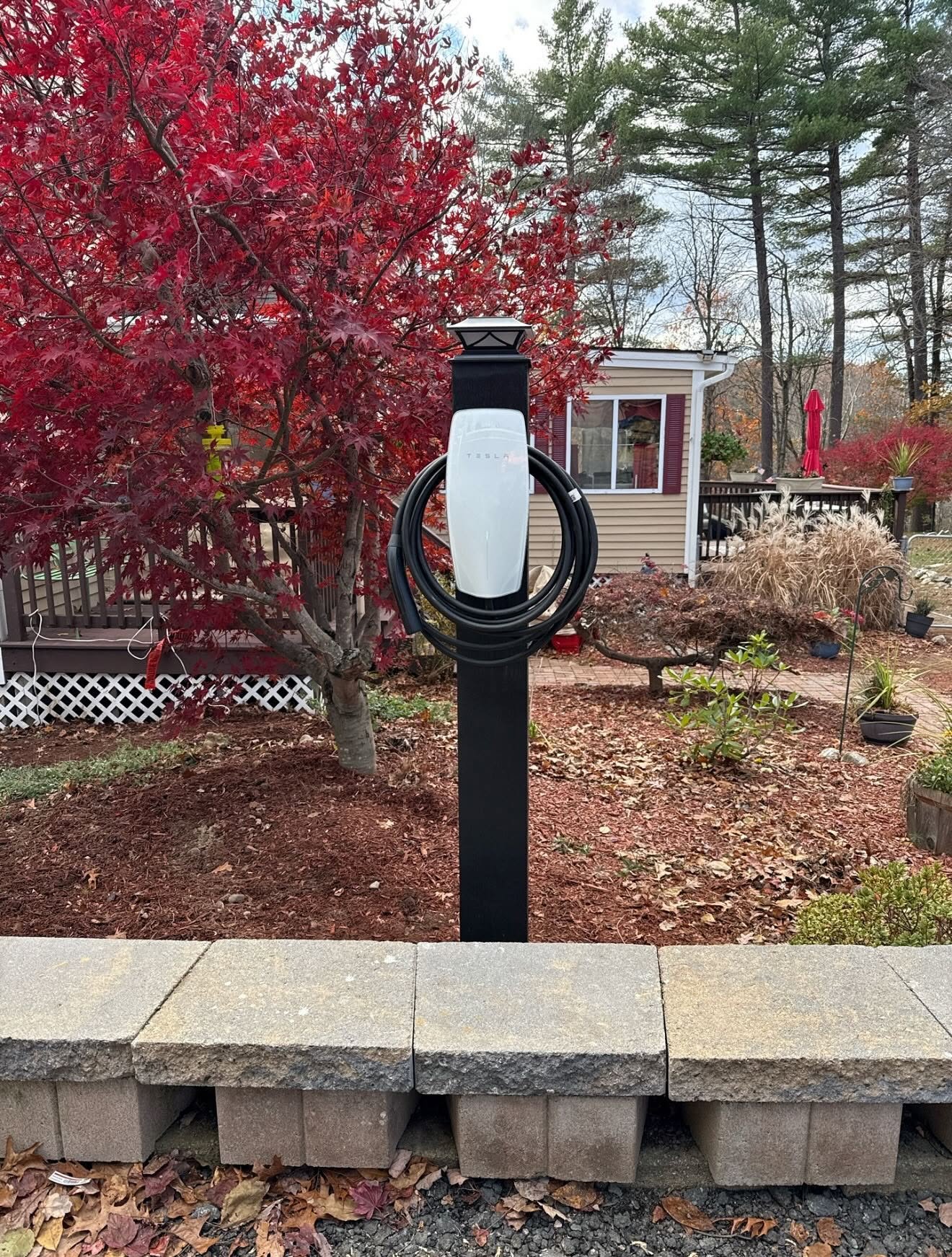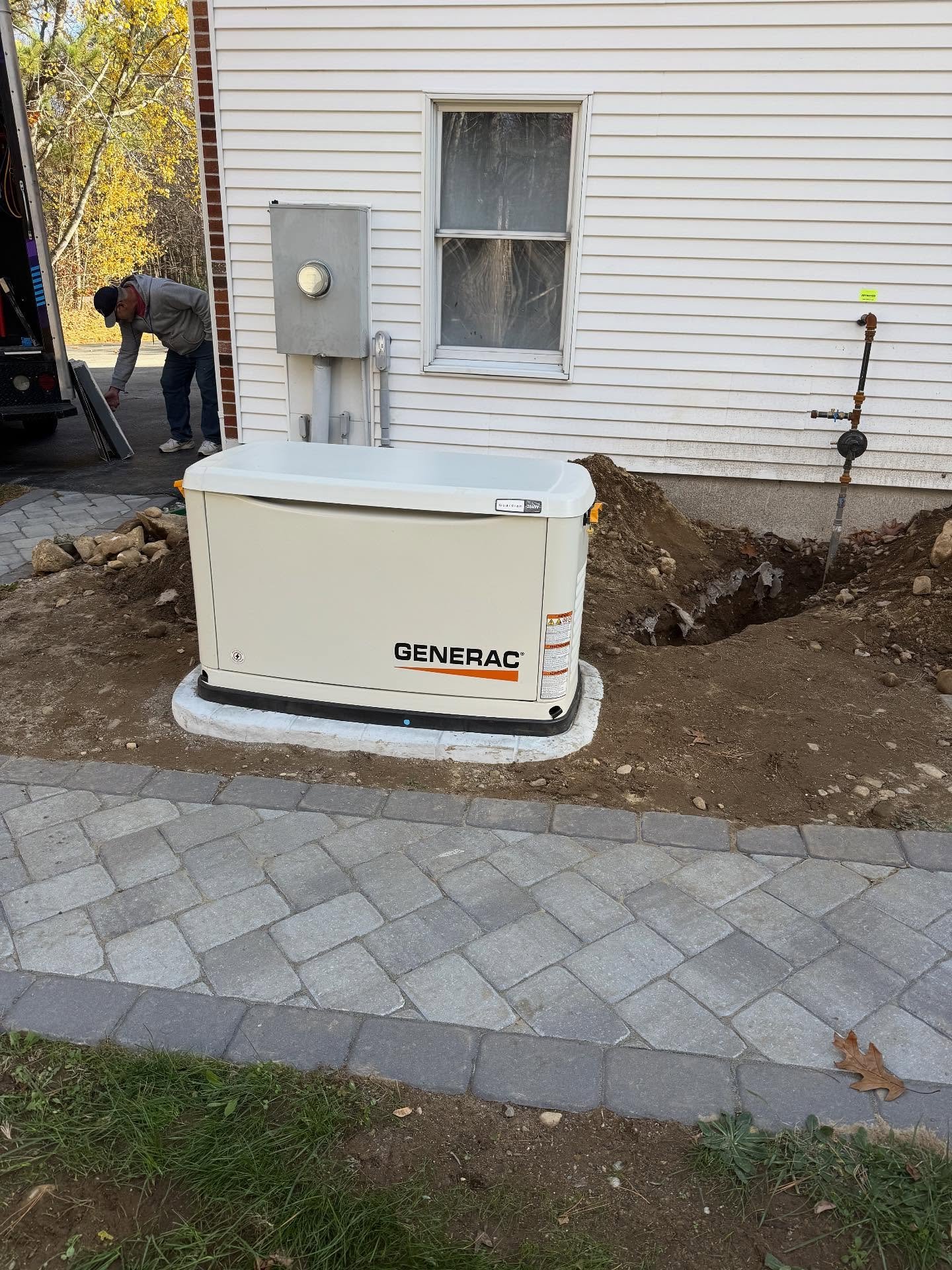
Adding a home office setup or an EV charger sounds simple until the lights start flickering. Both draw steady power for hours at a time, and your electrical panel may not have room for either one. Before you buy equipment, you need to understand your panel capacity home office circuits will require.
At Arete Electric & HVAC Services, we get calls every month from Sandown, NH homeowners who added a charger or an office setup and then tripped breakers or dimmed lights. Most of these problems trace back to one thing: nobody checked panel capacity first. This guide walks through what capacity means, how to check yours, and when you need a professional load calculation.
What Does Panel Capacity Actually Mean?
Panel capacity is the total amount of electrical current your service panel can safely distribute to every circuit in your home. Most residential panels are rated for 100, 150, or 200 amps.
That number is a ceiling, not a target. Your existing lights, appliances, HVAC system, and outlets already use a portion of that capacity. Adding a new 240-volt EV charger circuit or a home office running multiple monitors, a space heater, and computer equipment adds more draw on top of what’s already there.
If the panel is already close to its limit, a new circuit can push it past safe operating levels. That’s when breakers trip repeatedly, or worse, wiring overheats.
Signs Your Panel Is Already Near Its Limit
You don’t need special tools to spot early warning signs. Watch for these patterns before you schedule any new circuit installation:
- Breakers that trip when you run two appliances at once
- Lights that dim when the AC or a large appliance kicks on
- A panel with few or no open breaker slots
- A panel over 20 years old with no recent upgrades
- Buzzing or warm panel covers
Any one of these signs means your home needs a professional inspection before adding load. These are the same red flags we look for during a standard electrical load calculation visit.
How an Electrical Load Calculation Determines Real Capacity
An electrical load calculation follows National Electrical Code formulas to add up every circuit’s demand and compare it against your panel’s rated capacity. This isn’t guesswork. Licensed electricians use standardized worksheets that account for general lighting, fixed appliances, HVAC equipment, and any new loads you plan to add.
According to the U.S. Department of Energy, home energy use has shifted significantly as households add EV chargers, heat pumps, and home offices, which is exactly why older panels sized for a 1990s household often fall short today.
During a load calculation, we typically:
- Inventory every existing circuit and its rated amperage
- Apply code-required demand factors for continuous loads
- Add the proposed new circuit (EV charger or office circuit) at its full rated draw
- Compare the total against your panel’s main breaker rating
If the total exceeds about 80% of panel capacity, we recommend a panel upgrade before adding anything new.
Home Office Circuits: What Actually Draws Power
A home office looks low-power compared to a kitchen, but the math adds up faster than people expect. A dedicated 15- or 20-amp circuit is often the right call for a home office running multiple devices continuously for eight or more hours a day.
Common home office loads include:
- Desktop computers and dual or triple monitors
- Printers and small servers or NAS units
- Space heaters or portable AC units
- Charging stations for laptops and phones
Individually, none of these seem like much. Run them together on a shared circuit with other rooms, though, and continuous daily use wears on that circuit differently than occasional appliance use elsewhere in the house.
EV Charger Circuits Need Their Own Dedicated Capacity
A Level 2 EV charger typically requires a dedicated 40- to 60-amp, 240-volt circuit that draws power continuously for several hours at a stretch. That’s a substantially bigger load than almost anything else in a typical home, aside from central HVAC.
This is why an electric panel installer will almost always run a full load calculation before installing an EV charger circuit, even in newer homes. A 100-amp panel that handles daily life fine can be pushed to its limit the moment a charger starts pulling 40 amps for six hours overnight.
We regularly install and service EV charger circuits for Sandown-area homeowners. Whether you are considering a Level 1 or Level 2 charger, our EV charger installation services provide more information about charger options and the typical installation process.
When You Need a Panel Upgrade Instead of a New Circuit
Sometimes the answer isn’t a new breaker. It’s a bigger panel. A panel upgrade is usually necessary when your existing service is 100 amps or less and you’re adding a high-draw circuit like an EV charger, especially alongside electric heat or a heat pump.
Signs an upgrade makes more sense than squeezing in one more circuit:
- Your panel has zero or one open slot
- Your load calculation exceeds 80% of rated capacity
- You’re planning multiple additions (EV charger plus office plus future heat pump)
- Your panel is original to a home built before 2000
Upgrading now, rather than patching capacity issues one circuit at a time, usually costs less over the long run and avoids repeat service calls.
Frequently Asked Questions
How do I know if my panel can handle an EV charger?
The only reliable way is a professional load calculation. A qualified electrician measures your existing draw against your panel’s rated capacity and tells you whether a dedicated circuit fits safely or whether you need an upgrade first.
Can I add a home office circuit without upgrading my whole panel?
In many cases, yes. If your panel has open breaker slots and available capacity, a licensed electrician can add a dedicated 15- or 20-amp circuit without a full panel upgrade. A load calculation confirms whether that’s true for your home.
What size panel do I need for an EV charger and a home office?
Most homes adding both benefit from at least a 150- to 200-amp panel, though the exact size depends on your existing loads. An electrical load calculation is the only way to get a number specific to your house.
How much does a panel upgrade typically involve?
A panel upgrade replaces your main service panel with a higher-rated unit and often requires a permit and utility coordination. Timelines and requirements vary by town, so a local electrician can walk you through what applies in your area.
Get Your Panel Checked Before You Add New Circuits
Checking your panel capacity home office and EV charger additions require is not optional if you want reliable power and safe wiring. A short load calculation now prevents tripped breakers, dimmed lights, and costly rework later. Contact Arete Electric & HVAC Services today to schedule your electrical load calculation and find out exactly what your panel can support.